




TŌKU TUAKIRITANGA My Identity
$799.00
Year Levels: Years 9-10
NZ Curriculum Level: Levels 1 & 2
Duration: 30+ Hours
Cost: $799 + GST (one-off purchase cost)
Ākonga explore identity, belonging, and what makes each person unique while building confidence using te reo Māori. They learn and practise delivering a karakia, introduce themselves, and begin sharing their connections to people and places.
Through engaging activities and discussions, students reflect on who they are and what shapes their identity. This unit supports the development of language skills alongside a deeper understanding of self and others.
WHĀINGA PAETAE Achievement Objectives
At Level 1 of the New Zealand Curriculum, ākonga develop a foundation in te reo Māori through simple, meaningful language used in familiar contexts.
Ākonga learn to understand and use basic words, phrases, and sentence structures to communicate about themselves, their whānau, and everyday experiences.
These Achievement Objectives guide the learning experiences in this unit and outline the core communicative expectations for ākonga at these levels.
Throughout this unit, ākonga will learn to:
-
1.1 greet, farewell, and acknowledge people and respond to greetings and acknowledgments
-
1.2 introduce themselves and others and respond to introductions 1.3 communicate about numbers, using days of the week, months and dates
-
1.4 communicate about personal information
-
1.5 communicate about location
-
1.6 understand and use simple polite conventions
-
1.7 use and respond to simple classroom language
PUTANGA AKO Learning Outcomes
The learning outcomes describe what ākonga will be able to demonstrate by the end of the unit. They focus on communicative competence, cultural participation, confidence, and relational growth, ensuring learning extends beyond language recall to meaningful application.
By the end of this unit, ākonga will be able to demonstrate the following skills at a beginner's level:
- Develop a foundation in te reo Māori through meaningful, authentic communication.
- Create and share simple, purposeful sentences to describe themselves and their world.
- Apply mātauranga Māori concepts to their learning and relationships.
- Use multiple language modes to connect, express, and reflect as emerging speakers of te reo Māori.
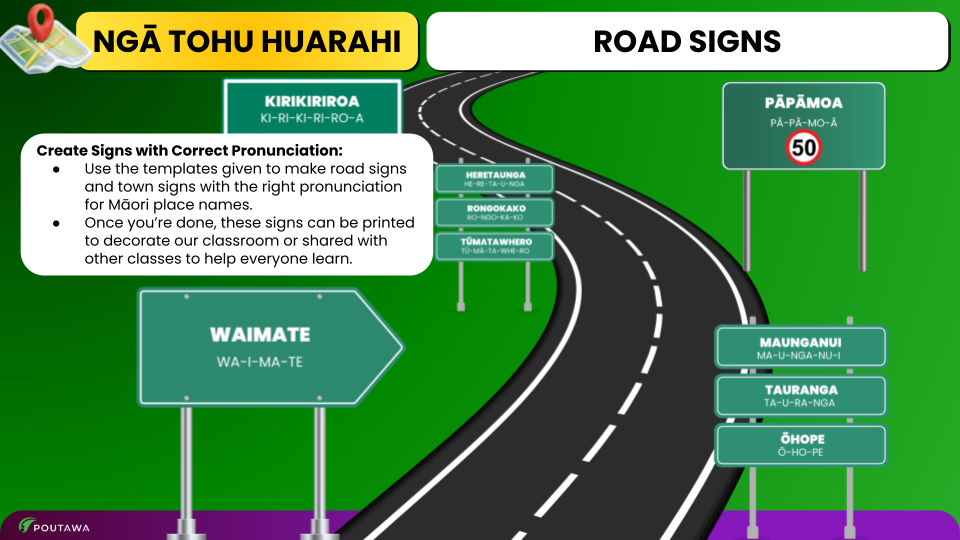
- Use accurate pronunciation and rhythm to express ideas with clarity and respect.
- Establish an enthusiastic and progressive mindset for the learning and relevance of te reo Māori.
WHAKAPŪMAUTANGA Assessments
This unit features short, scaffolded assessments designed to build confidence across the different language modes — listening, speaking, reading, and writing — while tracking student progress over time.
At junior level, the focus is on growth and developing confidence rather than measuring fixed or high-stakes achievement.
Tasks progress from oral responses to written application and an identity-based kōrero, supporting meaningful communication in authentic contexts.
Aligned with NZC Level 1 and the Pou Reo framework — Te Tika, Te Rere, Te Māori, and Te Ora o te Reo — the emphasis is on clarity, confidence, and cultural integrity.
TASK 1 – MIHIA TE REO | FOUNDATIONS OF LANGUAGE
- A short oral assessment focused on listening and speaking skills.
- Ākonga respond immediately to familiar spoken prompts using greetings, introductions, and simple sentence patterns.
- This low-pressure task prioritises comprehension, clarity, and confidence, supporting early oral fluency and encouraging students to take risks in spoken reo.
TASK 2 – TE AO TOROTORO | THE WORLD AROUND US
- A written assessment focused on reading comprehension and sentence construction. Ākonga read short sentences in te reo Māori, respond to questions, and create their own simple sentences using familiar structures.
- This task emphasises recognising meaning and applying language patterns while strengthening independence in written reo.
Task 3 – Tōku Puāwaitanga o te Reo | Flourishing in Reo
- An integrated written and oral capstone assessment.
- Ākonga write a short profile about themselves or a whānau member and present their kōrero either live or recorded.
- This task highlights growing confidence, identity-based language use, and the ability to sustain meaningful communication in te reo Māori.
NGĀ PĀINGA Unit Benefits
🌱MĀ NGĀ ĀKONGA
-
Builds confidence and pride in using te reo Māori. Strengthens identity and sense of belonging.
-
Fosters collaboration and collective learning through ako and tuakana–teina.
-
Encourages creativity and digital fluency.
-
Promotes advocacy for te reo Māori as a living language of Aotearoa.
🎓MĀ TE KAIAKO
-
Ready-to-teach, culturally responsive unit with clear structure.
-
Supports integration of te reo, tikanga, and mātauranga Māori across the curriculum.
-
Encourages authentic use of language in daily routines.
-
Strengthens whanaungatanga and shared learning between kaiako and ākonga.
-
Connects kaiako with local iwi, marae, and whānau for authentic engagement.
NGĀ HUA Ō ROTO What's Included
📋 MĀHERE AKO - FULL UNIT PLAN
A complete unit plan for your department, including curriculum links, unit rationale, learning intentions, and teaching approaches aligned to the appropriate learning level and quality assurance requirements.
📚 LESSON SLIDES AND SEQUENCING
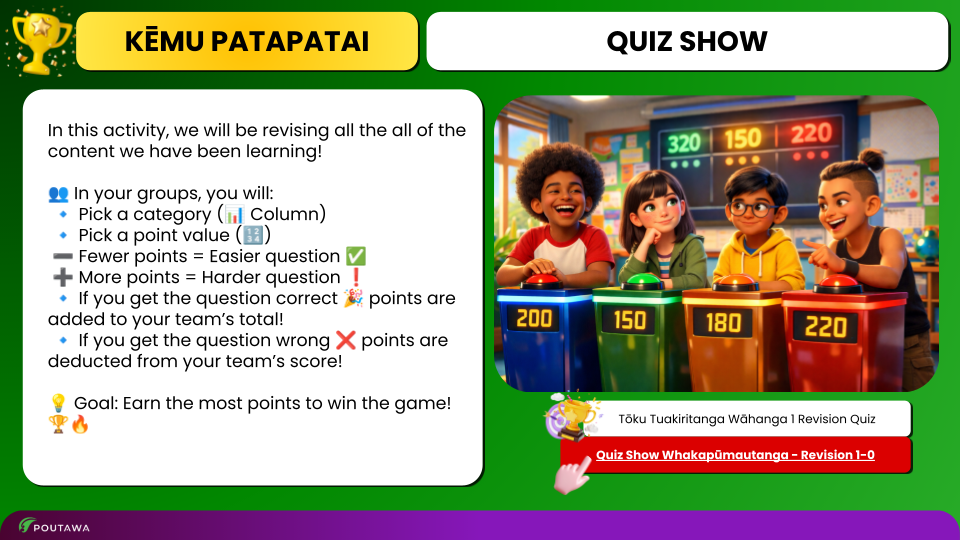
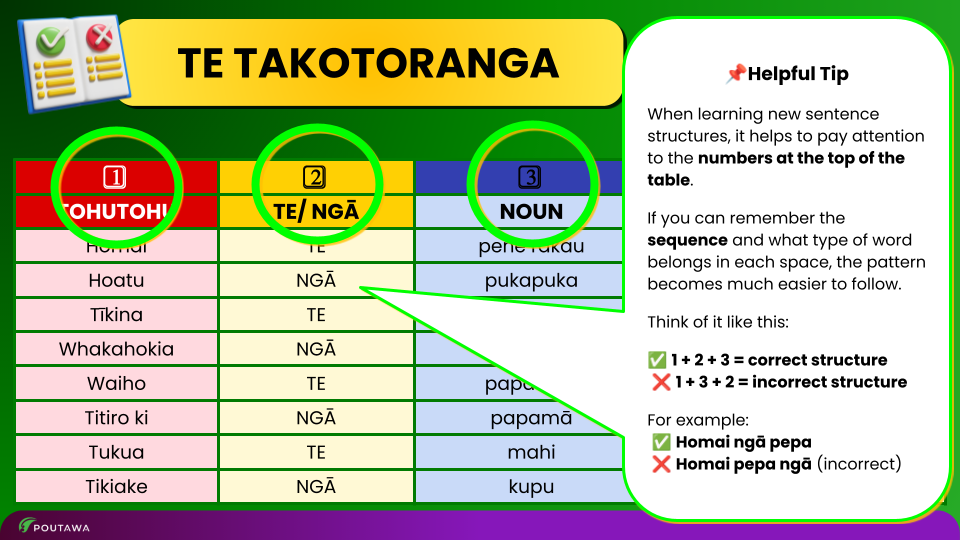
Structured lesson sequencing with ready-to-use slides and clear facilitation guidance for kaiako. Includes Ākonga instructions and content explanations aligned to the unit’s objectives and learning progression.
🎯 INTEGRATED LANGUAGE MODES
A range of interactive games and activities with kaiako and Ākonga instructions that reinforce learning across the ara reo. Includes guidance for adapting or creating additional activities using Poutawa platforms.
📝 ĀKONGA EVALUATION & FEEDBACK
Formative feedback tools to track Ākonga engagement and learning throughout the unit, alongside summative evaluation templates that support reporting and inform future teaching and learning decisions.